
Throughout history, those in power have shaped society in their own image.
They establish systems, hierarchies, and beliefs about who people are, what they are worth, where they belong, and what they are allowed to become.
Generations are born into these systems, raised within them, and taught to accept them as reality.
People begin to repeat the same ideas, follow the same rules, and judge others according to standards they never questioned in the first place.
Almost like living under a spell.
An artificial reality that everyone participates in, reinforces, and eventually mistakes for truth.
But just because the world agrees on something doesn’t make it true.
The Artificial Reality We Inherit
Think about how much of what people believe was decided long before they were born.
What makes someone respectable. Who deserves authority. Who belongs. Who is considered intelligent, beautiful, successful, worthy, or inferior.
These ideas are passed down through education, institutions, culture, traditions, and families.
Eventually, people stop seeing them as beliefs.
They see them as facts.
That is what makes social conditioning so powerful. A person doesn’t have to consciously choose a belief to participate in it. They can inherit it, grow up surrounded by it, and spend their entire life reinforcing it without examining where it came from.
The Matrix is a useful metaphor for this.
People live within a constructed understanding of reality, following rules they believe are simply the way things are.
But who established those rules?
Whose interests do they serve?
And why should their version of reality determine who someone else is?
Racism: When Falsehood Becomes a Social System
Racism demonstrates how a false idea can be turned into an entire social order.
Human beings were divided into racial categories, assigned different levels of worth, and placed within hierarchies that benefited those at the top.
These ideas were used to justify slavery, colonization, segregation, exclusion, and unequal treatment.
The hierarchies were created and maintained by people. They were not evidence that one race possessed greater human worth than another.
Yet these beliefs became embedded in laws, institutions, education, opportunities, and everyday social interactions.
People were born into societies where racial inequality had already been normalized.
And what had been constructed by human beings came to be treated as though it were the natural order of things.
That is the danger of an artificial reality.
A lie does not need to be true to shape someone’s life.
It only needs enough people, institutions, and authority reinforcing it.
And when people repeatedly encounter the same judgments, they can begin to question themselves rather than the system judging them.
Why am I being treated this way? What is wrong with me? Why do the same opportunities seem available to others but not to me?
But the existence of a hierarchy does not prove that the people placed beneath it belong there.
It proves that a hierarchy exists.
Someone else’s prejudice is not evidence of your identity, intelligence, dignity, or worth.
The power to impose a definition is not the power to make it true.
The Same Conditioning Exists Within Families
Society isn’t the only place where people inherit false realities.
Families can create and maintain their own.
Children are born into expectations, beliefs, roles, and rules that existed before they arrived.
They are told who they are, how they should behave, what they should believe, and what is acceptable for them to become.
Sometimes these expectations are passed down for generations.
A child may be taught that obedience is love, silence is respect, or sacrificing themselves is necessary to maintain peace.
They may be assigned a role within the family and treated as though that role reflects their true identity.
And because these beliefs come from parents or relatives, they can feel especially authoritative.
But a belief does not become true because your parents taught it to you.
A family can pass down wisdom. It can also pass down prejudice, fear, shame, control, and false understandings of who a person is.
What is inherited is not automatically what is true.
And being the person who questions an inherited belief does not make you wrong.
Sometimes it means you are the first person willing to examine what everyone else has continued to accept.
Why Truth Can Disrupt Families
Jesus said something particularly striking in Matthew 10:34–36.
He spoke about the division that following Him could bring, even between parents and children and within the same household.
Jesus was speaking about the consequences of allegiance to Him. Following Him could place a person at odds with those closest to them.
This reveals an important distinction.
Peace is not the same as agreement. And agreement is not the same as truth.
A family can appear peaceful because nobody challenges its beliefs.
A community can appear united because everyone follows its expectations.
A society can appear orderly because people accept the positions assigned to them.
But if that peace depends on people denying what is true, remaining silent, or surrendering their dignity, what exactly is being preserved?
Sometimes the moment someone stops conforming is the moment the conflict becomes visible.
The conflict may not have begun when they questioned the system.
It may have been there all along, concealed by their compliance.
Do Not Conform to This World
Romans 12:2 says:
“Do not conform to the pattern of this world, but be transformed by the renewing of your mind.”
The passage continues by connecting that renewal to discerning God’s will.
I find this particularly meaningful.
Because how can someone discern truth while automatically accepting everything they’ve been taught to believe?
How can they distinguish who they are from who other people have told them to be?
How can they recognize falsehood if they have never questioned the reality they inherited?
Renewing the mind requires examining what has been accepted.
It means becoming willing to question the beliefs, assumptions, and definitions that have shaped how you understand yourself and others.
Not simply exchanging one unquestioned belief for another, but learning to discern.
For me, this is where following Christ becomes especially significant.
Jesus said:
“I am the way and the truth and the life.” — John 14:6
If Jesus is the truth, then truth cannot be reduced to what society has normalized, what a family demands, or what those in power have established.
And if we are created in God’s image, as Genesis 1:27 teaches, no racial hierarchy can determine that some human beings possess less God-given dignity than others.
The world’s classifications do not replace God’s creation.
Who Benefits From What You Believe?
Whenever a belief tells someone they are inferior, must remain in a particular position, or must surrender their dignity to be accepted, I think an important question is:
Who benefits from this belief?
Who gains authority from it?
Who gains access, opportunities, status, or control?
And who is expected to carry the cost?
Racial hierarchies have historically benefited dominant groups while restricting the rights and opportunities of others.
Controlling family systems can similarly preserve one person’s authority by requiring another person’s obedience or silence.
When a false belief benefits those enforcing it, the arrangement can continue even when its injustice is apparent.
And the people living within it may be encouraged to adapt themselves rather than question the arrangement.
They may spend years trying to become acceptable according to standards that were never designed to treat them as equals.
But why should someone spend their life trying to satisfy a false definition of who they are?
Why should they sacrifice themselves to maintain a reality that benefits someone else?
A belief being widely accepted tells us how influential it has become.
It does not tell us whether it is true.
The Cost of Living in an Artificial Reality
But there is another cost to these artificial realities that is rarely examined.
What happens to the human being who participates in them?
Whether the system benefits you or disadvantages you, there is a price to accepting falsehood as truth.
You begin surrendering your own discernment.
Your mind learns what to believe. Your emotions learn what is acceptable to feel. Your will is directed toward what society tells you to pursue. And gradually, your understanding of yourself can become shaped by a reality that was never necessarily true.
It can feel like a fog over your mind.
You are living within it, making decisions within it, pursuing things within it, without recognizing the assumptions through which you see the world.
And because everybody around you appears to believe the same things, you may never think to question them.
You are told what success looks like, what makes someone valuable, what you should desire, and what will finally make you happy.
So you pursue those things.
You acquire the possessions, the position, the approval, or the life you were told you should want.
And yet, something is missing.
You have what you were promised would fulfill you, but the fulfillment isn’t there.
You may be surrounded by material things and still feel empty.
Because you can obtain everything an artificial reality tells you to desire without ever discovering what genuinely brings you peace.
And I think that is one of its greatest costs.
You can spend your entire life pursuing what you were taught to want, without ever asking whether it was true to who you are.
Even Those Who Benefit Pay a Price
An artificial reality does not only affect those it disadvantages.
Consider someone who benefits from a racial or social hierarchy.
They may receive opportunities, privileges, status, and protection because of their position within it.
But what happens when maintaining those advantages requires them to overlook another person’s humanity?
When they must accept an unjust belief, remain silent about wrongdoing, or participate in the exclusion of others?
They may gain something externally while compromising something internally.
Their conscience. Their integrity. Their capacity to recognize and respond to the humanity of another person.
And the longer they justify their participation, the easier it can become to stop questioning themselves.
The system may offer comfort, but comfort is not the same as peace.
It may offer belonging, but belonging is not the same as truth.
It may offer status, but status is not the same as dignity.
And being rewarded for participating in something does not make that participation right.
You do not become free by benefiting from a falsehood that requires someone else’s humanity to be diminished.
You remain dependent on the same falsehood to preserve your position.
When You Begin to See Through It
Those disadvantaged by a system may have more reason to question its claims, because the difference between what is promised and what they experience can become impossible to ignore.
But seeing that something is wrong is only the beginning.
There is still the question of what is true.
And when you begin examining the beliefs that shaped your reality, you may discover how much of what you once accepted was built upon assumptions rather than truth.
The roles people played. The expectations you were taught to meet. The rewards you were encouraged to pursue. The judgments you were expected to accept.
Things may begin to look different.
You may realize that much of what appeared natural was learned, much of what appeared permanent was constructed, and much of what appeared meaningful was sustained by collective agreement.
That realization can be deeply unsettling.
Because you are no longer simply questioning individual beliefs.
You are questioning the reality through which you learned to understand your life.
But it can also be the beginning of freedom.
You begin reclaiming your ability to discern.
To feel what is genuinely yours to feel.
To choose according to what is true rather than what is expected.
To recognize your own dignity without needing a system to grant it to you.
And to recognize that same dignity in others.
Truth Restores What Falsehood Divides
For me, this is where truth and restoration meet.
Truth does not only expose what is false.
It allows us to return to what is real.
To stop surrendering our minds, emotions, and will to beliefs we never consciously examined.
To stop pursuing an identity constructed around someone else’s expectations.
And to stop participating in systems that require us to disregard our own humanity or the humanity of others.
Because when you recognize another person as a human being, you cannot honestly justify their mistreatment through a false hierarchy.
And when you recognize your own humanity, you no longer need to accept those hierarchies as the measure of your worth.
This is where I see the connection to God.
We were not created to derive our worth from social hierarchies, racial classifications, or the approval of those who hold power.
Genesis 1:27 speaks of humanity being created in God’s image.
And Jesus said:
“I am the way and the truth and the life.” — John 14:6
If truth is central to who He is, then living in truth is not merely an intellectual exercise.
It becomes a question of how we live, what we participate in, how we treat one another, and whether we are willing to examine the falsehoods we have inherited.
Restoration is not simply learning to function within an artificial reality. It is returning to wholeness beyond the falsehoods that have shaped us.
And that requires truth.
Not the truth of whoever holds power.
Not the truth of whoever benefits.
Not the truth of whatever everybody has agreed to believe.
But truth itself.
Freedom Lies in Knowing Who God Created You to Be
There comes a point when the question changes.
Instead of asking, How do I become acceptable to the world?
You begin asking, Why am I allowing the world to define who I am?
You begin examining the beliefs you’ve inherited, the roles you’ve been assigned, and the judgments you’ve accepted.
You begin separating what is true from what has merely been repeated.
And you stop treating other people’s perceptions as the final authority over your identity.
For me, this is part of what it means to live in truth.
Not to spend my life trying to convince everyone to see me differently.
Not to become someone else so that I can finally be accepted.
But to know who God created me to be and refuse to let falsehood determine my life.
The world may have an entire system of beliefs about who you are.
Your family may have its own version.
People may agree with one another, reinforce those beliefs, and treat their judgments as unquestionable facts.
But their agreement does not make those beliefs true.
Freedom lies in knowing who God created you to be, not in who the world tells you to become.
Because truth does not change according to who holds power.
It does not become false because people reject it.
And it does not become true because generations have agreed upon it.
Truth remains truth, regardless of how many people believe otherwise.
“Do not be conformed to this world, but be transformed by the renewal of your mind…”
Romans 12:2 — ESV, excerpt
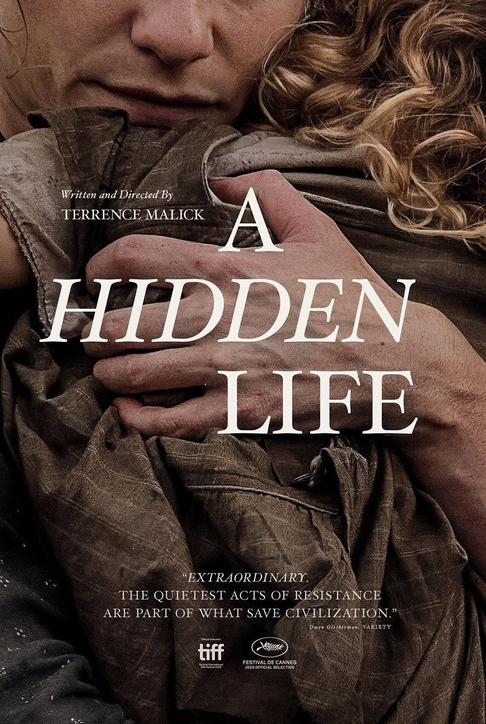
If you want to see what it looks like when an entire community accepts a false reality as normal, I recommend A Hidden Life (2019).
Based on the true story of Franz Jägerstätter, an Austrian farmer who refused to swear allegiance to Hitler, the film shows one man choosing to preserve his conscience and humanity while the society around him increasingly conforms to a system built on persecution and claims of superiority.
What makes this film particularly meaningful to me is that it makes collective participation in falsehood visible.
You see how ordinary people come to accept an unjust system, reinforce one another’s beliefs, and turn against someone who refuses to participate. People who consider themselves good and reasonable can still become part of something deeply wrong.
And this is where I see a connection to the experience of racism.
When you’re a Black person or person of color encountering racism in an environment where discriminatory beliefs have become normalized, it can feel as though everyone is operating from the same script. The same assumptions. The same judgments. The same exclusions.
No one necessarily has to coordinate. The beliefs have already been absorbed and reinforced by the surrounding culture.
From the inside, that collective behavior can be difficult to comprehend, especially when the people participating insist that nothing is wrong.
A Hidden Life allows us to see a similar mechanism from the outside.
The historical circumstances and the positions of the people involved are different. But the film makes something visible that can otherwise remain hidden: how an entire social environment can normalize falsehood and expect everyone within it to conform.
And how maintaining one’s position within that environment can come at the cost of conscience, truth, and another person’s humanity.
The most disturbing part is not only that people participate in wrongdoing. It’s how normal that wrongdoing can become to those participating in it.